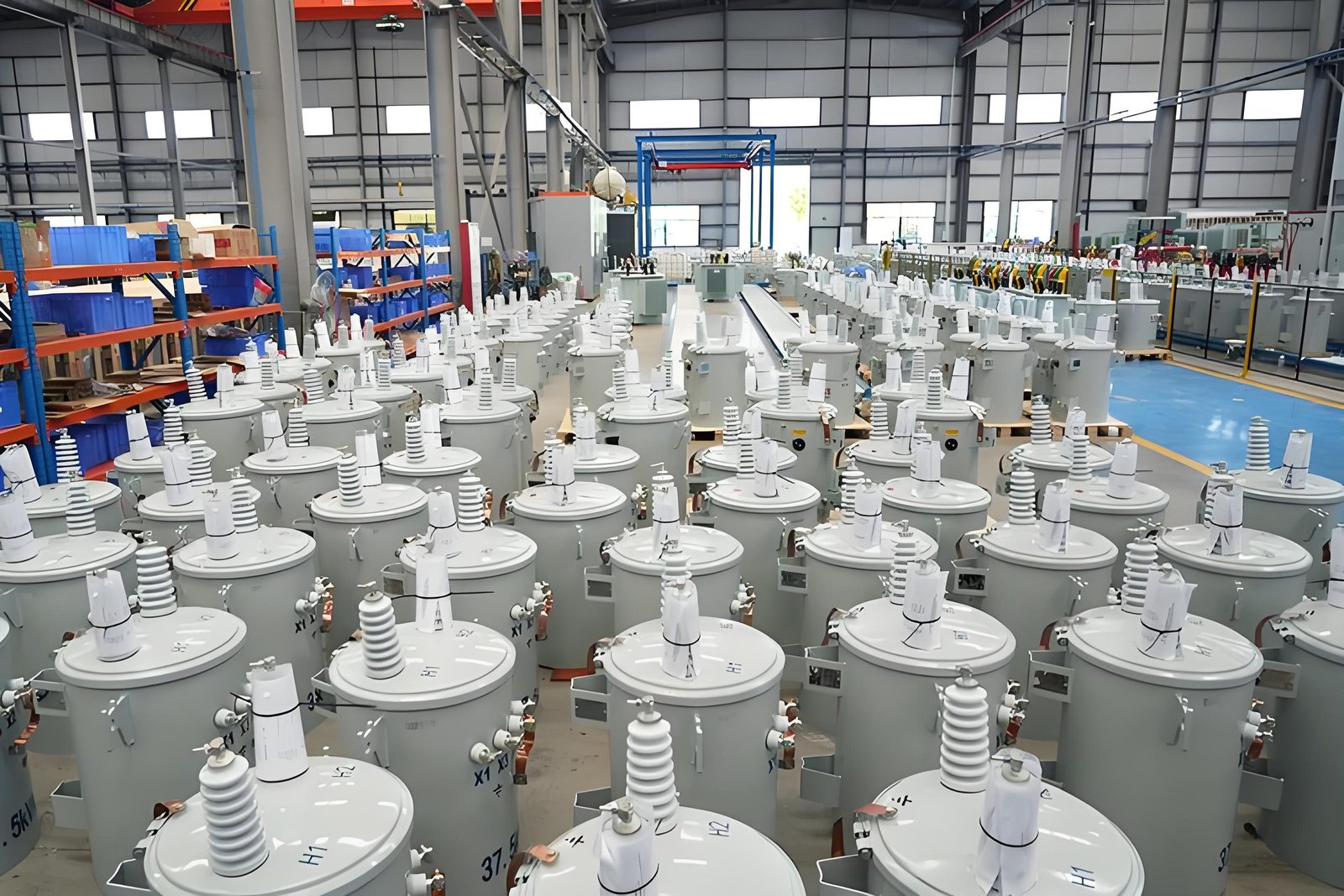
For large transformers, transportation can become a significant part of the project.
Before placing an order, consider:
Overall dimensions
Total weight
Transportation route
Port handling
Lifting requirements
Site access
Foundation design
Oil transportation requirements
Assembly and commissioning
A transformer that is technically suitable but difficult to transport to the site may create substantial additional costs.
For large projects, transportation conditions should therefore be considered during the initial transformer selection.
15. Don’t Forget Future expansion
Transformer selection should not focus only on today’s load.
If the facility is expected to expand, consider:
Future production capacity
Additional substations
New production lines
Renewable-energy integration
Additional motors
EV charging infrastructure
Data-center expansion
However, simply selecting a much larger transformer is not always the best solution.
In some cases, installing two smaller transformers instead of one large transformer can provide:
Better redundancy
Easier maintenance
Greater operational flexibility
Improved reliability
The optimal solution depends on the project’s load profile and reliability requirements.
A Practical Transformer Selection Checklist
Before requesting a quotation, engineers and buyers should ideally have the following information available:
Parameter
Example
Transformer type
Oil-immersed
Rated capacity
10 MVA
HV voltage
33 kV
LV voltage
11 kV
Frequency
50 Hz
Vector group
Dyn11
Impedance
8%
Cooling
ONAN/ONAF
Tap changer
Off-circuit / OLTC
Tap range
±8 × 1.25%
Installation
Outdoor
Applicable standard
IEC 60076
Ambient temperature
As per site conditions
Altitude
Site-specific
Accessories
Project-specific
Testing
Routine / Type / Special tests as required
Having these parameters clearly defined can significantly reduce the risk of receiving technically incomparable quotations.
Final Thoughts
Selecting a power transformer is a combination of electrical design, operating requirements, environmental conditions, reliability considerations and lifecycle economics.
The right transformer is not necessarily the largest transformer or the lowest-priced transformer. It is the transformer that provides the required electrical performance, reliability and service life while fitting the project’s technical and commercial requirements.
For buyers, one of the most important steps is to prepare a clear technical specification before comparing suppliers.
For engineers, the key is to ensure that transformer parameters are properly coordinated with the complete electrical system — including switchgear, protection, cables, grounding and future load requirements.
When in doubt, confirm the transformer specification with the project electrical engineer or utility before placing the order.
Need Help Selecting a Transformer?
If you have the basic project information — such as capacity, voltage level, frequency, installation location and application — a transformer supplier can usually help develop a preliminary technical configuration and identify the key parameters that need to be confirmed before quotation.
At VoltGrid, we support customers with transformer selection, technical configuration and application-based solutions for utility, industrial, renewable-energy and commercial projects.