
OVERHEAD DISTRIBUTION / UTILITY NETWORKS
Pole Mounted
Transformers.
Local power.
Built for the overhead network.
Pole-mounted transformer configurations for utility feeders, communities and distributed loads. Coordinate electrical ratings, mounting details and protection with the requirements of your network.
Project-specific selection. Clear technical documentation.
01 / THE RIGHT FIT
More than a rating.
A fit for your network.
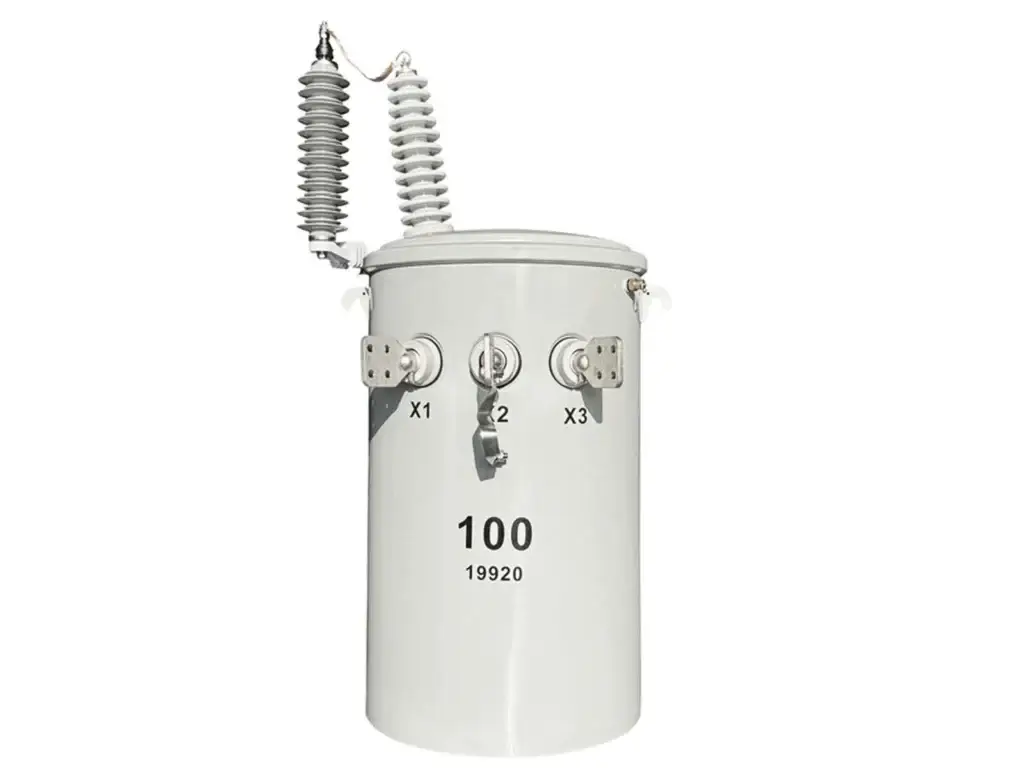
A pole-mounted transformer is part of an overhead distribution arrangement. Its mounting, bushings, neutral connections and protective devices need to work with the local utility design.
VoltGrid reviews the service requirement and equipment interfaces before defining the supply. Existing drawings and nameplate information are especially useful for replacement projects.
Coordinate the pole interface
Confirm bracket spacing, lifting points, installed weight and the supporting structure requirements.
Match the utility arrangement
Review voltage connections, neutral treatment, fusing and surge protection against the network specification.
02 / CONFIGURATION OPTIONS
Match the service
and connection arrangement.
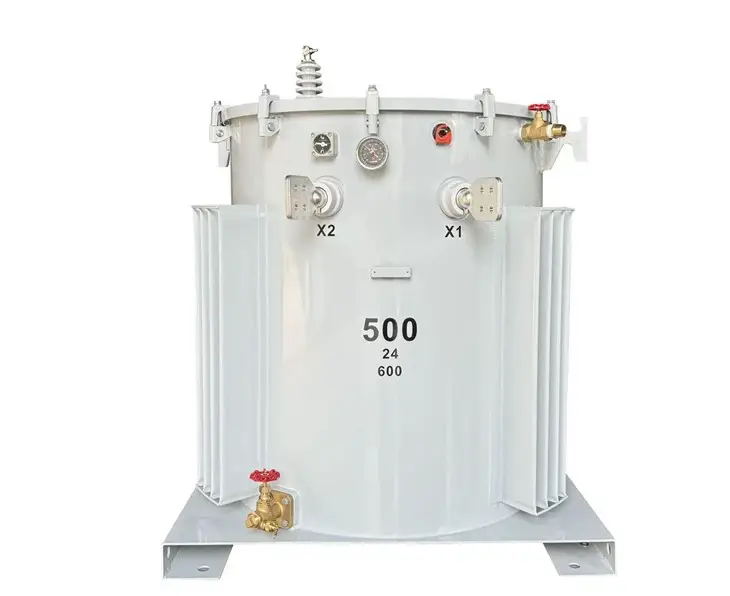
Single-phase loads and three-phase services require different connection and mounting reviews. The utility standard remains the starting point.
Single-phase service
For single-phase distribution requirements where the utility specifies pole-mounted equipment.
- Confirm primary and secondary connections
- Specify bushing positions, taps and nameplate details
- Review tank, mounting brackets and accessories
Three-phase service
For a three-phase arrangement using a specified transformer configuration or a coordinated bank.
- Define the connection and neutral arrangement
- Confirm unit configuration and bank requirements
- Coordinate structural loading and protection
The pictured equipment illustrates a configuration. Do not use the image nameplate as the rating of the product range.
Confirm the equipment
around the transformer.
A complete replacement or new installation needs the accessories and interfaces to be considered together.
Mounting & handling
Bracket geometry, lifting arrangements, weight and access for installation.
Bushings & connections
Terminal location, conductor interface, insulation level and neutral details.
Protection & monitoring
Fusing, surge arresters, pressure relief and project-specified indicators.
03 / TECHNICAL SELECTION
A utility-ready
enquiry starts here.
Share the utility specification or an existing nameplate and drawing. We can then identify the electrical and mechanical details that need confirmation.
Enquiry checklistPDF · Project specification worksheet| Selection parameter | What to confirm |
|---|---|
| Rated capacity | Required kVA and the expected service load |
| Voltage & frequency | Primary / secondary voltage, phase and system frequency |
| Connections | Connection diagram, neutral arrangement and terminal designation |
| Insulation & taps | Specified insulation level, tap range and adjustment arrangement |
| Tank & mounting | Material, coating, bracket dimensions, weight and lifting details |
| Bushings & terminals | Bushing type, location and conductor connection requirements |
| Protection | Fusing, surge arresters and other utility-specified accessories |
| Performance & environment | Losses, temperature rise, sound, ambient and corrosion exposure |
| Acceptance requirements | Utility standard, nameplate format and agreed test documentation |
Specific ratings, availability and supporting evidence are confirmed for the proposed equipment.
04 / APPLICATIONS
Built around
the way you use power.
Bring the application into the specification.
It shapes the equipment and the interfaces.
Rural electrification
Overhead distribution serving dispersed communities.
Focus: Service voltage & installation accessResidential feeders
Local supply within an overhead distribution network.
Focus: Utility standard & service connectionsCommercial loads
Small commercial and distributed three-phase requirements.
Focus: Load profile & connection arrangementNetwork replacement
Replacement of installed equipment and feeder upgrades.
Focus: Nameplate & mounting compatibility05 / PROJECT SUPPORT
From your requirements
to a defined supply.
Agree the equipment scope, supporting documents and project interfaces at each stage.
- 01
Identify the service
Supply the utility standard, load and required voltage ratio.
- 02
Check the interfaces
Compare bushings, connections and mounting dimensions.
- 03
Agree accessories
Define protection, indicators, markings and test requirements.
- 04
Prepare the delivery
Confirm quantities, packing and installation documentation.
06 / COMMON QUESTIONS
Before you
specify.
Practical questions about pole mounted transformer selection and project requirements.
Ask a technical questionCan you match an existing pole-mounted transformer?
Send clear nameplate photographs, the connection diagram, mounting dimensions and the utility specification. A matching capacity alone does not establish electrical or mechanical compatibility.
Can three-phase loads be served from pole-mounted equipment?
A three-phase service can use an arrangement approved for the network, such as a specified three-phase unit or transformer bank. Connections, protection and supporting structures must be coordinated as part of the utility design.
Are surge arresters and fuses always included?
The accessory scope depends on the utility arrangement and purchase specification. Identify whether devices are integral, externally mounted or supplied separately, and confirm their ratings and interfaces.
What should be specified for coastal or corrosive environments?
Describe the exposure and any utility coating or material requirements. Tank material, surface preparation, terminals and mounting hardware should be reviewed together.
What is needed for a replacement enquiry?
Provide the old nameplate, photographs, dimensions, quantity and destination. Include any changes in load, network voltage, protection or installation requirements since the original equipment was installed.
LET’S DEFINE YOUR NEXT PROJECT
Your requirements.
Our starting point.
Tell us what you are planning. Include “Pole Mounted Transformer” in your message and share the information you have available.
- Required kVA, voltage ratio and utility specification
- Existing nameplate, connection diagram and mounting dimensions
- Accessory scope, quantity and delivery destination
Request a project review
Start the conversation with our team.