
TRANSMISSION / GENERATION / INDUSTRY
Power
Transformers.
Built around the demands
of your power system.
Oil-immersed power transformer solutions for substations, generation and industrial networks. Define the electrical duty, then coordinate the design, interfaces and delivery around your project.
Project-specific selection. Clear technical documentation.
01 / THE RIGHT FIT
The connection between
generation and demand.
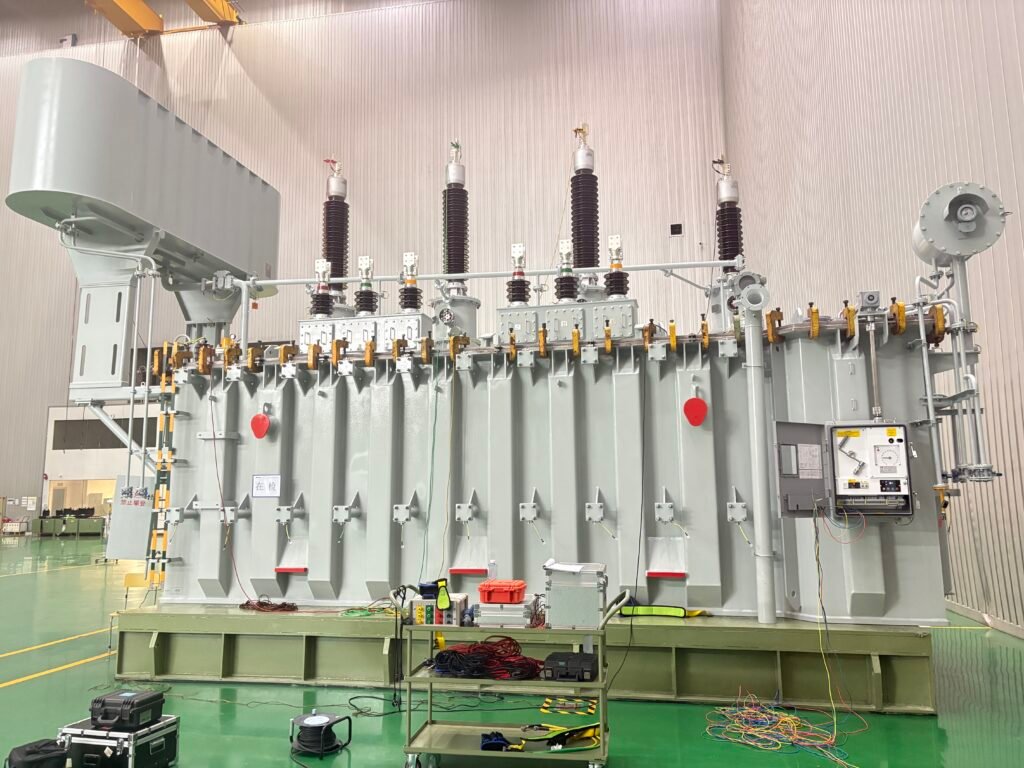
Power transformers connect voltage levels across a power system. Their duty can range from a utility substation to a generator connection or a large industrial supply.
VoltGrid coordinates the equipment scope around your network studies, operating conditions and site layout. Cooling, voltage regulation, protection interfaces and transport constraints are reviewed as part of one specification.
Start with the system
Voltage ratio, impedance and connection requirements set the basis for the design.
Plan beyond the nameplate
Consider losses, site interfaces, transport dimensions and maintenance access together.
02 / CONFIGURATION OPTIONS
Define the duty.
Then define the design.
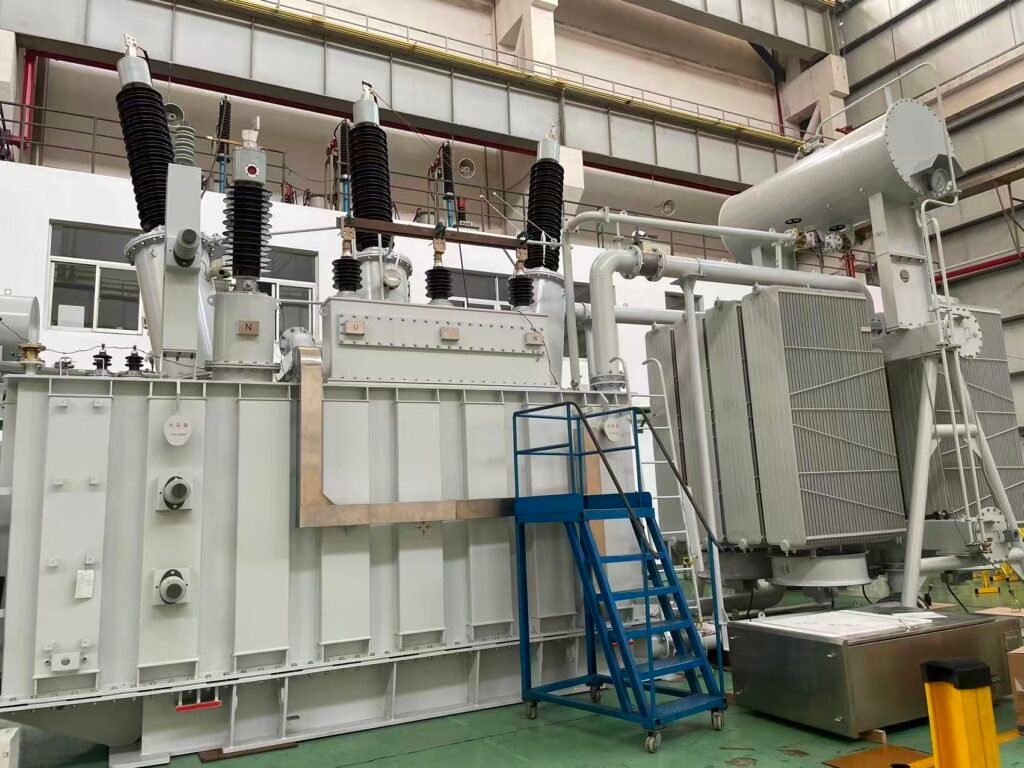
Different duties create different design priorities. Share the network arrangement so the proposed transformer reflects how it will operate.
Substation transformers
For voltage transformation within transmission and distribution substations.
- Match rated power, voltage ratio and insulation levels
- Coordinate regulation, impedance and parallel operation
- Review bushings, cable boxes and protection interfaces
Generator step-up transformers
For connecting the generator-side voltage to a higher-voltage network.
- Provide generator ratings and the connection arrangement
- Define operating duty, voltage range and cooling needs
- Coordinate generator-side terminals and grid protection
Industrial power transformers
For primary power supply to industrial facilities with a defined process duty.
- Describe the load profile and planned expansion
- Identify harmonics or unusual operating conditions
- Agree access, service and integration requirements
Special duties, auxiliary windings and unusual load profiles are reviewed individually before a configuration is proposed.
03 / TECHNICAL SELECTION
Specify the system.
Review the interfaces.
A complete enquiry connects electrical ratings with operating duty and installation details. Guaranteed values belong in the agreed project data sheet.
Enquiry checklistPDF · Project specification worksheet| Selection parameter | What to confirm |
|---|---|
| Rated power | Required MVA, continuous duty, loading profile and expansion allowance |
| Voltage & frequency | HV / LV ratings, operating voltage range and system frequency |
| Connections | Vector group, neutral arrangement and any tertiary winding |
| Impedance & losses | System study requirements and agreed loss evaluation basis |
| Cooling | Cooling stages, ambient limits, auxiliaries and redundancy requirements |
| Tap changing | On-load or off-circuit arrangement, range, steps and controls |
| Site interfaces | Bushing or cable connections, clearances, foundation and earthing |
| Monitoring & protection | Temperature, liquid level, pressure, relays and control signals |
| Standards & inspection | Applicable project standards, test schedule and witnessing requirements |
Specific ratings, availability and supporting evidence are confirmed for the proposed equipment.
04 / APPLICATIONS
Built around
the way you use power.
Bring the application into the specification.
It shapes the equipment and the interfaces.
Utility substations
Network reinforcement, replacement and new substations.
Focus: Voltage regulation & system coordinationPower generation
Transformer interfaces between generation and the grid.
Focus: Generator duty & grid requirementsRenewable collection
Central substations serving renewable energy projects.
Focus: Load profile & connection studiesIndustrial networks
Primary supplies for plants and large process loads.
Focus: Operating duty & expansion05 / PROJECT SUPPORT
From your requirements
to a defined supply.
Agree the equipment scope, supporting documents and project interfaces at each stage.
- 01
Review the specification
Establish network ratings, duty and the project standard.
- 02
Agree the interfaces
Review drawings, cooling, controls and transport limits.
- 03
Confirm the test scope
Define inspection points and the required reports.
- 04
Coordinate delivery
Plan packing, accessories, handling and site documentation.
06 / COMMON QUESTIONS
Before you
specify.
Practical questions about power transformer selection and project requirements.
Ask a technical questionHow is a power transformer different from a distribution transformer?
The names usually describe the duty in the network. A power transformer commonly serves bulk power transfer or a major substation, while a distribution transformer supplies a local distribution level. The actual selection must follow the voltage, load and project specification.
Can a transformer be used for generator step-up duty?
The transformer must be specified for the generator and grid connection. Share the generator ratings, voltage range, connection arrangement and operating duty so the design and interfaces can be reviewed.
How should the cooling arrangement be selected?
Base the cooling selection on continuous loading, ambient conditions, temperature limits and the availability of auxiliary power. Agree the rating at each cooling stage and any redundancy requirements in the proposal.
Which documents should accompany the equipment?
Agree a document schedule covering the data sheet, general arrangement, terminal details, control drawings, test reports and handling instructions. The exact package depends on the equipment scope and contract.
What determines the delivery plan?
Design review, material availability, inspection requirements, shipping dimensions and the destination all affect the plan. Confirm the schedule against an agreed technical scope and delivery terms.
LET’S DEFINE YOUR NEXT PROJECT
Your requirements.
Our starting point.
Tell us what you are planning. Include “Power Transformer” in your message and share the information you have available.
- Rated MVA, voltage ratio and the single-line diagram
- Cooling, tap changing and site interface requirements
- Project standard, destination and target delivery date
Request a project review
Start the conversation with our team.